
Ever since I started working at Inex, there’s one question I hear almost immediately when I tell friends what we do.
“Oh nice,” they say. “So… what are the tricks to avoid paying tolls?”
It’s funny. And also completely predictable.
I live in New Jersey. Most of our driving is toward New York City. Which means we’re surrounded by some of the most expensive toll roads in the country – and, frankly, some of the most creatively layered tolling logic you’ll find anywhere.
Why, for example, do you pay to enter New York through a tunnel – and then pay again immediately for congestion pricing once you’re on the other side? The Lincoln Tunnel is $15. The New York congestion charge is another $15. A quick hour-and-a-half drive from Princeton to JFK airport can easily cost $40 in tolls alone. And that’s for a passenger car. For a 5-axle semi, you’re looking at something closer to $150.
So yes, people are curious. And skeptical. And occasionally tempted.
But to understand why toll evasion exists – and why it’s such a large problem – you first need to understand how toll collection actually works.
How Toll Road Revenue Collection Works
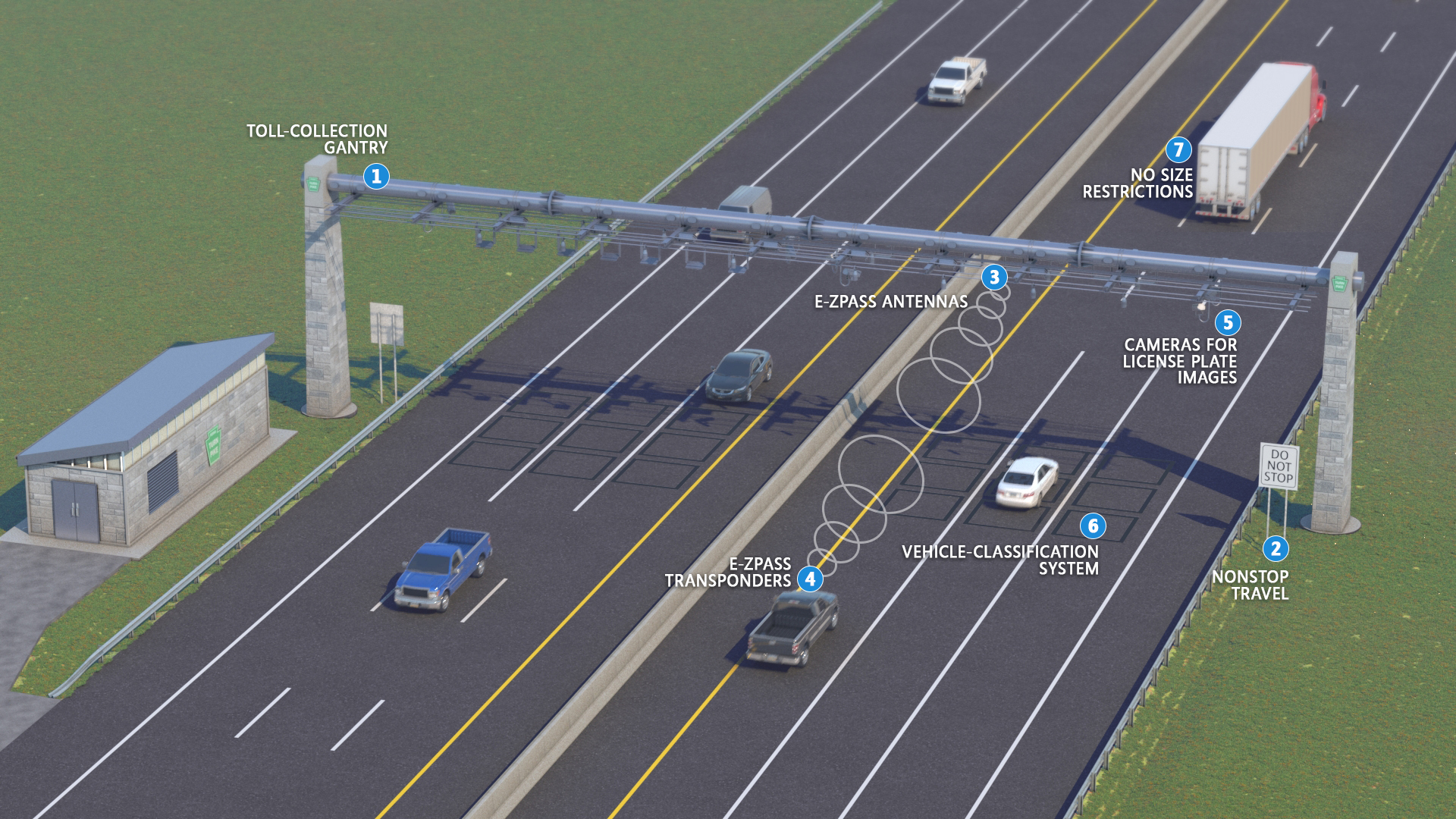
Modern toll roads rely on two core technologies: RFID transponders (like E-ZPass) and license plate recognition.
Under the hood, there’s more going on. Ground loops embedded in the pavement and, increasingly, lidar or similar sensors detect a vehicle’s presence and size. That detection event triggers everything else: the RFID reader wakes up, cameras capture images, and the system attempts to identify the vehicle.
License plates are typically photographed from both the front and the rear of the vehicle, where available.
In practice, about 85–90% of vehicles on a typical American toll road have a readable RFID tag – far from all. The rest are driving without a tag, a tag with a dead battery, or with the transponder tucked away in a glove compartment. For those remaining 10–15%, license plate reading is the only way to collect revenue.
And that brings us to an important legal reality.
Regardless of whether an E-ZPass tag is present, license plates are the only enforceable identifier. Every violation notice must be supported by photographs of the vehicle and its plates to stand up to legal scrutiny if challenged in court. Tags can move between vehicles. Plates cannot.
Lots of Money at Stake
This isn’t a niche problem.
Toll collection in the United States is a $25B+ industry, comparable in size to the entire urban public parking market or even professional sports ticketing. And it’s growing – driven by declining fuel tax revenues, new monetization models for infrastructure, and policy tools like congestion pricing, which New York now uses to fund public transportation.
When systems at this scale leak revenue, even small percentages matter.
Leakage in Toll Road Collection
Compared to other industries, toll revenue leakage is staggering. In the U.S., it’s commonly measured in the 3–10% range.
Imagine running a restaurant or a retail store where customers only paid 90% of their bill. You wouldn’t last long. By contrast, retail shrinkage – shoplifting, fraudulent returns, employee theft—averages about 1.5% nationwide, and only creeps slightly higher in places with particularly lax enforcement.
Toll roads operate under a very different reality.
Take the Pennsylvania Turnpike as a concrete example. Pennsylvania is unusual – in a good way – because it performs detailed audits and releases them publicly. According to recent reports, the PA Turnpike is consistently short $150–180 million out of $1.5–2.0 billion it is supposed to collect – over 10% of total toll revenue per 2022 Auditor General audit 2022 Auditor General audit and the 2025 PA Turnpike revenue analysis.
I suspect Pennsylvania may be a bit worse than average. It’s one of the states that does not require front license plates, which immediately makes reliable vehicle identification harder. But the problem is not unique to PA.
Even here at home, the New Jersey Turnpike is estimated to leave over $120 million in tolls uncollected each year, roughly 3–5% of revenue, based on publicly disclosed receivables and enforcement data.
The Actual Toll Road Leakage Numbers May Be Worse
Even these eye-watering figures likely understate the true scale of the problem.
Why? Because most audits focus on the billing process, not on whether every vehicle was correctly billed in the first place. They count invoices that were sent but never paid – either because the driver refused to pay or because the bill went to the wrong address. Some individuals owe American toll agencies more than $10,000.
What audits generally do not do is reconcile every vehicle that drove through a toll point with a corresponding, correct charge. That’s simply too complex at scale. As a result, entire categories of underpayment remain largely unmeasured: vehicle misclassification (paying a car toll while driving a truck), missed detections, incomplete entry-exit reconciliation, hardware glitches and systemic OCR misreads.
Where the Toll Road Revenue Leakage Comes From

The largest leakage category is straightforward: people don’t pay the bills they receive by mail.
On the Pennsylvania Turnpike, for example, only 52.1% of toll-by-mail invoices were paid within 150 days per PA 2025 Turnpike revenue analysis. Some drivers ignore invoices, betting on enforcement delays. Others never receive them because of address changes. And sometimes invoices are sent to the wrong person because a license plate was misread.
The second-largest category is unreadable license plates.
There are many reasons this happens:
- Accidental occlusion. Bicycle racks are a classic example. In a state like Pennsylvania, which lacks front plates, this problem is amplified.
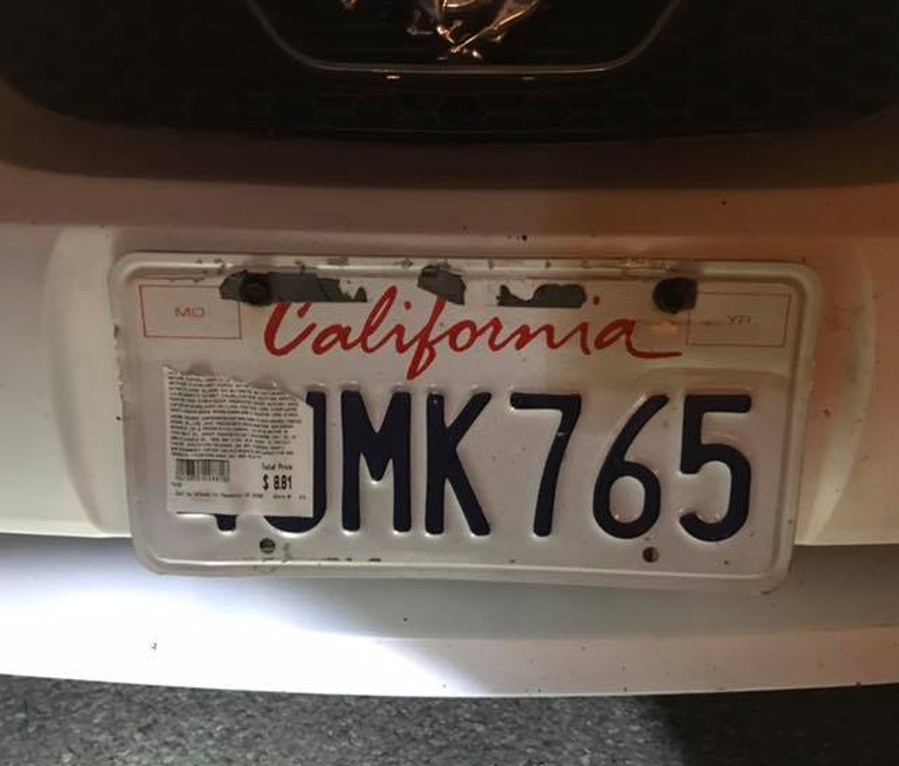
- Intentional obstruction. A strategically placed piece of tape over a single character can make a violation legally unenforceable, even though the ALPR algorithm may correctly guess what the missing character is.
- Fake or invalid license plates, which come in several flavors:
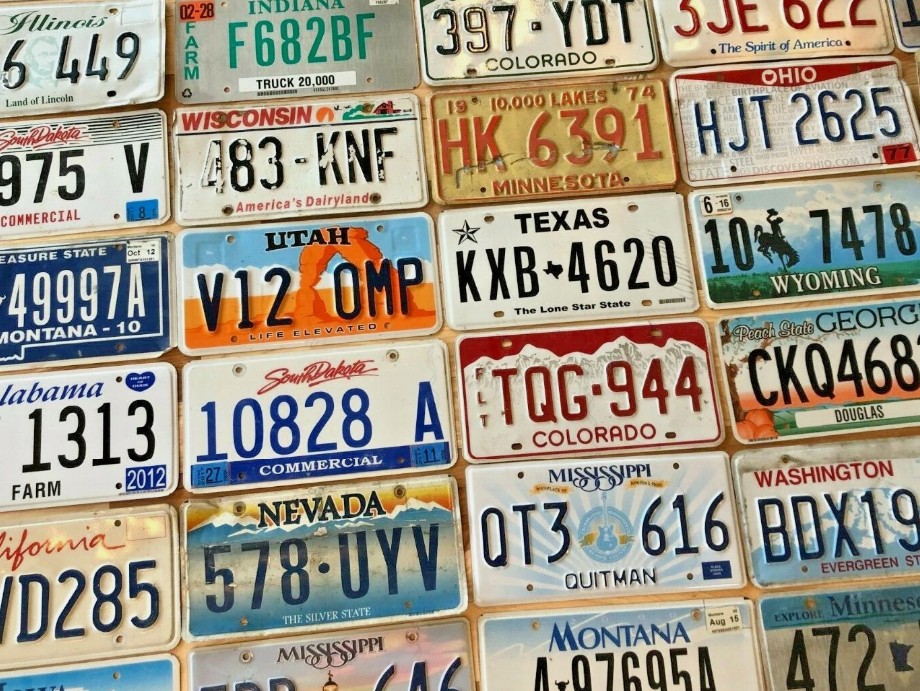
- Old plates purchased online through marketplaces like eBay
- Newly printed plates produced by overseas vendors and mailed into the U.S., such as those sold by sites like Customlicenseplates.us or Licenseplates.tv. About 15 years ago, a foreign company called IDChief supplied tens of thousands of fake driver’s licenses before U.S. Customs shut it down. Fake plates, oddly, remain far less aggressively enforced.
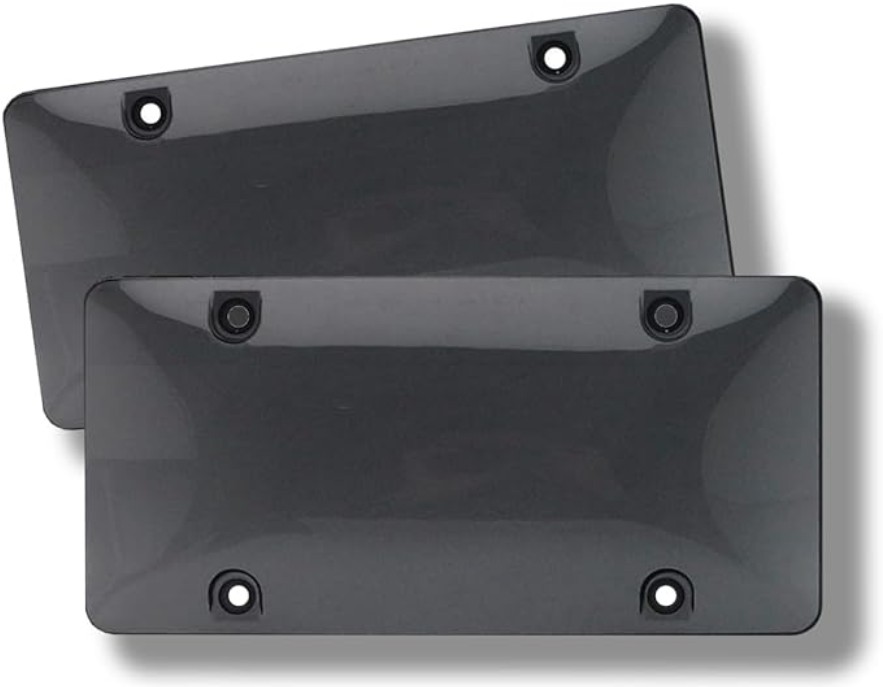
- License plate covers, widely sold online. Some are transparent; others are dark enough to degrade readability. Modern multispectral cameras—including Inex’s—can still read most of these plates, but accuracy drops well below the 99%+ levels we normally achieve.
- So-called “invisible” plate sprays or coatings. These are snake oil though. If you can read a plate with your eyes, a good license plate camera can read it too.
Other leakage categories exist, but they’re harder to quantify.
What’s to Be Done to Reduce Toll Road Revenue Leakage
At the end of the day, the license plate is the only enforceable vehicle identifier. E-ZPass tags can be moved, shielded, or lost. Plates are supposed to stay with the vehicle. Any toll invoice that aims to be enforceable must include clear images of the vehicle and its plates.
Reducing toll leakage ultimately depends on enforcing license plate rules – and that responsibility largely sits with DMVs and law enforcement.
There are practical steps states can take to recover tens of millions of dollars per year:
- Mandate front and rear license plates, which significantly reduces identification errors and occlusion risk
- Prohibit tinted covers and plate obstructions, which turn vehicles into revenue-free ghosts
- Enforce laws against counterfeit plates with the same seriousness applied to fake IDs and passports
- Deploy better toll road license plate reading technology. Dual-sensor cameras combining RGB and infrared dramatically improve plate readability throughout the day, even in direct sunlight
- Build auditing tools into toll systems. Real-time, independent assessment of collection effectiveness allows agencies to spot and respond to new evasion schemes before they scale.
Toll evasion isn’t just about drivers trying to get away with something. It’s about systems that weren’t designed with modern abuse patterns in mind. Fix the systems – and enforce the rules – and the “tricks” quickly stop working.