
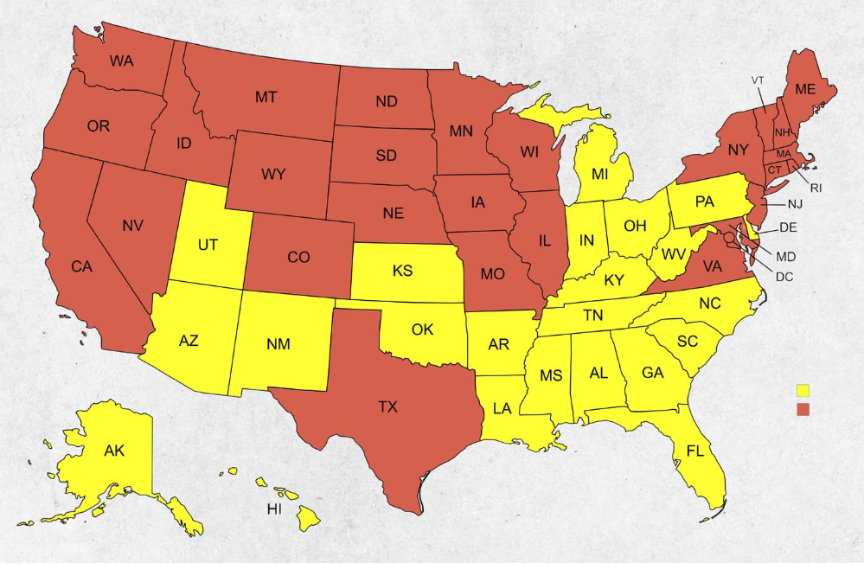
Why Front License Plates Matter for ALPR
Front license plates make license plate recognition more reliable in parking, tolling, law enforcement, and access-control applications. When vehicles have both front and rear plates, ALPR systems can capture two independent views of the same vehicle, reduce missed reads, improve transaction matching, and simplify camera placement at gates, garages, and tolling points.
In the United States, the lack of front plates in many states creates avoidable challenges for ALPR systems. Rear-only capture can require more lane distance, more complex camera positioning, and more fallback workflows when plates are blocked by trailers, bike racks, cargo, dirt, damage, or poor lighting.
For toll roads, parking operators, gated communities, airports, and commercial facilities, front plates are not just a regulatory detail. They directly affect vehicle identification, revenue protection, auditability, and operational efficiency.
A Simple Obstacle to Sophisticated ALPR Tech
Iceland’s Dirt-Road Tech vs. America’s Supercomputers
- a wobbly pole with a simple camera,
- a sign with a QR code,
- and the expectation you’ll pay on your phone.
And it worked flawlessly. Why? Because Iceland, like most of Europe, has standardized, retroreflective plates that practically glow at night. Even a bargain webcam can read them.
Meanwhile in the U.S., we have hundreds of plate designs. Florida alone offers more than 200 – sunsets, cartoon animals, college logos, you name it. Many aren’t even reflective. For ALPR vendors, that means super-smart cameras, endless retraining, re-optimizing, and data collection just to keep up. The machine learning is rocket science. The plates? Not so much.
Where Did the Front Plates Go?
Well… almost. Monaco is one of the few exceptions. But that’s Monaco: no tolls, valet parking everywhere, and more supercars per capita than anywhere else. If your front bumper is worth more than my house, maybe you get a pass.
But here in the U.S., we’re not dealing with fleets of Bugattis. We’re talking about millions of everyday sedans, pickups, and semis that toll systems and parking garages need to identify. Without front plates, our high-tech recognition systems are working with one hand tied behind their back.
Parking Lot Gymnastics
Sure, there are workarounds: post-capture recording, dynamic updates, and other clever software tricks. But let’s be honest – front plates make life so much easier. With them, you can mount a camera right at the gate – or even inside the gate bollard. No wiring puzzles, no geometry gymnastics, and no rear plates hidden behind bike racks or muddy cargo.
Toll Roads and the $3.50 Question
And drivers – especially commercial fleets – can get creative in avoiding tolls. A transponder might be “forgotten” in a glovebox or wrapped in aluminum foil. A rear plate might be conveniently scratched, bent, framed or hidden by cargo.
But a front plate closes the loophole. Two angles, double confirmation, fewer excuses. If the two reads don’t match, the transaction gets flagged and reviewed.
That’s why it’s puzzling to see Utah recently do away with the front plate requirement, citing a savings of $3.50 in plate printing and distribution. Let’s be honest: that’s less than the toll on a single bridge. One missed payment and the state’s already in the red. Meanwhile, our neighbor Pennsylvania is considering adding front plates – arguably the smarter move.
Everyday Life: Spotting Your Uber
Why Front Plates Make Sense
The U.S. builds some of the most advanced vehicle recognition systems anywhere. Our algorithms juggle hundreds of plate designs, non-reflective backgrounds, and every lighting condition imaginable.
But all that brilliance can’t solve the simplest problem: in many states, there’s no front plate to read.
So here’s my plea: let’s not complicate life just to save $3.50. Front plates don’t just help vendors. They make tolling fairer, parking easier, enforcement smarter, and even ride-hailing less confusing.
They don’t just help the machines. They help people. And that’s something worth defending.
Here is a simple summary of how front plates help:
| Parking garages | Allow cameras to be mounted closer to gates and reduce rear-plate geometry problems. |
| Toll roads | Provide a second plate view for transaction matching, violation review, and fraud reduction. |
| HOAs and gated communities | Improve hands-free vehicle access when rear plates are blocked or hard to capture. |
| Airports and curbside operations | Help identify vehicles in dense pickup, staging, and parking areas. |
| Law enforcement | Improve vehicle identification from more angles and reduce dependence on rear-only views. |
Related Inex Resources
– Learn how camera placement affects recognition accuracy: How to Install LPR Cameras for Best Accuracy
– Compare camera requirements by market: Differences Between Toll Road and Parking / Access Control LPR Cameras
– See Inex access-control ALPR camera solutions for parking and residential communities