
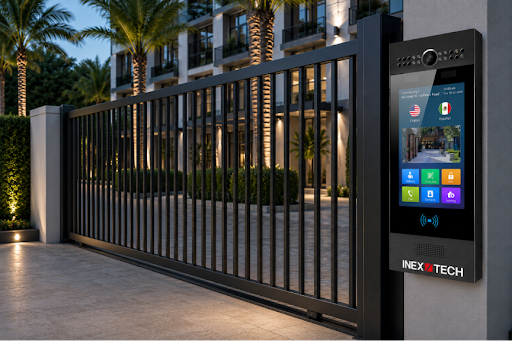
For decades, condominium access control systems have focused on a simple objective: controlling doors. If a resident, visitor, or vendor had the correct credential, they could enter the building. If they did not, access was denied. This approach worked when most security concerns revolved around physical entry into a lobby, clubhouse, or amenity space. But modern condominium and multifamily communities operate very differently. Residents arrive through vehicle gates. Visitors enter through guest lanes. Deliveries occur throughout the day. Contractors move between buildings. Amenities such as pools, fitness centers, parking garages, and clubhouses are shared by hundreds or even thousands of people. The challenge is no longer simply controlling a door. The challenge is understanding who is on the property.
At INEX Technologies, we call this challenge Property-Wide Identity Management – the ability to understand how residents, visitors, vehicles, amenities, and building access interact across an entire community.
Many access control systems can tell you who opened a door. Far fewer can help you understand how a visitor arrived, which resident invited them, where they accessed the property, or whether a vehicle remains on-site after hours.
This is the missing layer in modern condominium access control: property-wide identity management that connects building access, visitors, amenities, and vehicle activity into a single security ecosystem.
The difference between traditional condominium access control and Property-Wide Identity Management can be summarized as follows:
| Traditional Condominium Access Control | Property-Wide Identity Management |
|---|---|
| Focuses on doors and credentials | Focuses on people, visitors, and activity |
| Records individual access events | Connects events across the property |
| Building-centric security | Community-centric security |
| Answers: “Can this door open?” | Answers: “Who is on the property?” |
| Limited visibility into visitor activity | Visibility into residents, visitors, vehicles, and amenities |
| Separate systems for doors, gates, and visitors | Unified view across the property |
| Designed to grant access | Designed to provide operational intelligence |
Why Traditional Access Control Falls Short in Modern Condominiums?
Most access control systems were designed around credentials. Whether the credential is a key fob, access card, mobile app, PIN code, or QR code, the system answers a single question: “Can this person open this door?” That model works well for office buildings where employees typically enter through a limited number of controlled entrances. Condominiums and multifamily communities are different. A resident may enter through a vehicle gate, park in a garage, access a building lobby, use an elevator, enter a fitness center, and later visit a clubhouse or pool – all in a single day. Visitors, contractors, delivery drivers, maintenance personnel, and vendors follow entirely different paths through the property. Traditional access control systems often treat each interaction as a separate event. As a result, communities may know that a door was opened but have limited visibility into the broader context:
- How did the visitor arrive?
- Which resident authorized access?
- Which amenities were accessed?
- Is the visitor still on the property?
- Was the vehicle expected?
- Did the same person access multiple buildings?
These questions are becoming increasingly important for Florida condominiums and HOAs, where high visitor traffic, seasonal residents, shared amenities, and multiple entry points create security challenges that extend far beyond the front door.
The problem is not a lack of access control.
Most condominium communities already have some combination of intercoms, key fobs, access cards, mobile credentials, gate operators, or visitor entry systems. The real challenge is that these systems often operate independently of one another. A property may have one system controlling building doors, another managing visitor access, and yet another controlling vehicle entry. As a result, management teams are forced to piece together information from multiple sources when investigating incidents, managing visitors, or responding to resident concerns. The result is fragmented visibility across the property. Communities may know that a credential opened a door or that a gate granted access, but they often lack a complete picture of who entered the property, how they arrived, where they went, and when they left.
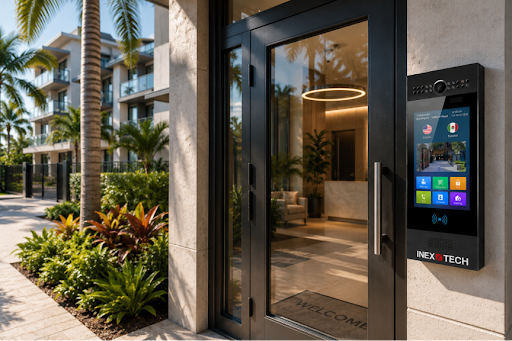
Why Florida Condominiums Have an Identity Problem, Not an Access Problem
Florida condominium communities present a unique security challenge that many traditional access control systems were never designed to solve. Unlike office buildings, condominium communities experience constant movement between residents, visitors, deliveries, service providers, contractors, rideshare drivers, and seasonal guests. Many communities also operate multiple buildings, parking structures, amenity areas, pedestrian entrances, and vehicle gates. As a result, the question is no longer whether someone can open a door. The more important question is whether the community understands who is on the property. For example, a visitor may enter through a vehicle gate, park in a garage, access a lobby, use an elevator, visit a resident, and later enter a clubhouse or fitness center. Traditional access control systems often record these events separately – if they record them at all. This creates blind spots for management teams, security personnel, and HOA boards attempting to understand activity across the property. The larger and more active the community becomes, the more valuable property-wide visibility becomes. Communities increasingly want to know not only who opened a door, but how visitors arrived, who authorized them, where they accessed the property, and whether they are still on-site. This shift is transforming access control from a door-management tool into a property-intelligence platform.
Consider a typical South Florida condominium community. A guest arrives through a vehicle gate, parks in a garage, accesses a residential tower, visits a resident, uses a pool area, and leaves several hours later. Traditional access control systems often record these activities as separate events. Property-Wide Identity Management connects them into a single operational story.
Access Control Should Follow the Resident Journey
Most access control systems treat every door as an isolated event. A credential opens a lobby door. Another credential opens a fitness center. Another grants access to a parking garage or clubhouse. But residents do not experience a property as a collection of individual doors. They experience it as a community. A typical resident may enter through a vehicle gate, park in a garage, access a building entrance, use an elevator, retrieve a package, visit a fitness center, and later access a pool or clubhouse – all within a single day. From a security perspective, these activities are often disconnected across multiple systems. From a resident’s perspective, they are part of a single journey. The next generation of multifamily access control is moving toward a unified model where building access, amenities, visitor management, and vehicle entry operate as part of the same ecosystem. This approach reduces administrative complexity while providing property managers with a more complete understanding of activity across the community.
The Hidden Cost of Amenity Access Abuse
Amenities are among the most valuable assets within a condominium community, yet they are often the least monitored from an access-control perspective. Pools, fitness centers, clubhouses, package rooms, rooftop lounges, business centers, and parking garages can experience hundreds or even thousands of access events each month. When access systems are fragmented, communities may struggle to answer important operational questions:
- Are amenities being used by authorized individuals?
- Are guests accessing areas beyond their approved permissions?
- Are shared facilities being used after hours?
- Which amenities experience the highest traffic?
- Are access privileges being properly enforced?
Historically, access control focused on granting entry. Modern communities increasingly need visibility into how shared spaces are being used. This is particularly important for Florida condominiums and HOAs, where community amenities often represent a significant investment and play a major role in resident satisfaction. The future of access control is not simply opening doors – it is understanding activity across the property and using that information to improve both security and operations.
From Access Control to Property Intelligence
For years, access control systems were designed primarily to answer operational questions:
- Can this person enter?
- Does this credential have permission?
- Should this door unlock?
Those questions are still important, but they are no longer enough for modern condominium communities. Property managers, security directors, and HOA boards increasingly need answers to broader questions about activity across the property:
- Which visitors entered today?
- Which vehicles remain on-site?
- Which amenities experience the highest usage?
- Which residents generate the most guest traffic?
- Which vendors arrived after hours?
- Are access policies being followed consistently across the community?
These are not simply access-control questions. They are property-intelligence questions.
The communities that gain the greatest value from modern security platforms are no longer using access control solely to grant entry. They are using access data to improve operations, increase visibility, identify patterns, investigate incidents, and make better management decisions.
This shift – from controlling access to understanding activity – is defining the next generation of condominium and multifamily security.
The Missing Link: Connecting People, Visitors, and Vehicles
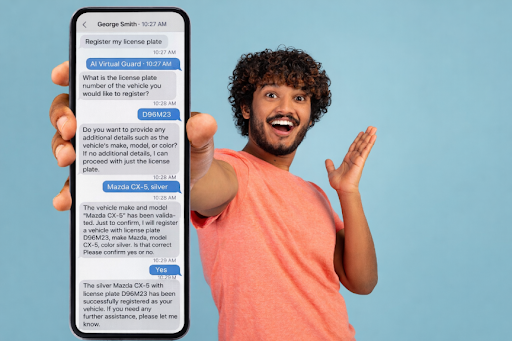
This is where many traditional access control systems reach their limits. Most platforms excel at managing doors, credentials, and visitor entry. Vehicle access is often treated as a separate system with separate records, separate administration, and limited connection to the rest of the property’s security infrastructure. As a result, communities may know that a visitor entered a building but not how they arrived. They may know a vehicle entered the property but not which resident authorized the visit. They may know a gate opened, but have no visibility into whether the visitor later accessed amenities, parking areas, or residential buildings. The result is fragmented identity management. Modern communities increasingly need a single view of property activity that connects residents, visitors, credentials, vehicles, and amenities into one operational picture. This is particularly important for condominium and HOA communities where residents, guests, vendors, deliveries, and service providers move continuously between gates, parking areas, buildings, and shared amenities throughout the day. The future of access control is not simply managing doors or gates independently. It is creating a unified identity layer across the entire property.
Why Vehicle Identity Matters in Condominium Security
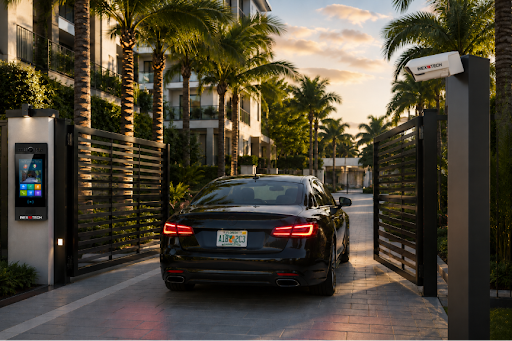
Most condominium security systems focus exclusively on people and credentials. Yet many visitors, vendors, contractors, deliveries, and residents first enter the community through a vehicle gate. Without vehicle identity, communities often know that a visitor arrived but cannot easily connect that visit to the vehicle used to access the property.
This is one reason license plate recognition (ALPR) is becoming an increasingly important component of modern condominium access control. By connecting vehicle identity to resident, visitor, and property activity records, communities gain a more complete understanding of who is entering the property and how they move throughout the community.
How Virtual Guard Creates a Property-Wide Identity Layer
INEX developed Virtual Guard around a simple observation:
The most important security questions in a condominium community often cannot be answered by a door access system alone. Communities increasingly want to understand the complete story behind property activity.
- Who entered?
- How did they arrive?
- Which resident authorized the visit?
- What areas of the property were accessed?
- How long did they remain on-site?
Traditional access control systems typically record individual events. Virtual Guard was designed to connect those events into a broader operational picture. Rather than treating doors, gates, visitors, amenities, and vehicles as separate systems, Virtual Guard creates a Property-Wide Identity Management framework across the property. This allows management teams to view activity through the lens of people, visitors, and property usage rather than through disconnected access logs.
The result is greater visibility, faster investigations, improved visitor management, and a more complete understanding of activity across the community.
Questions Every HOA Board Should Ask Before Selecting an Access Control System
Before selecting an access control platform, condominium boards and property managers should consider several important questions:
- Can the system provide visibility beyond individual door events?
- Can visitor activity be connected to the resident who authorized access?
- Does the platform unify building access, amenities, visitors, and vehicle activity?
- Can management quickly investigate incidents without searching multiple systems?
- Does the system scale as the community grows?
- Will the platform help improve operations as well as security?
The answers to these questions often reveal the difference between a traditional access control system and a modern property-intelligence platform.
As condominium communities continue to evolve, the most valuable systems will not simply control access. They will help communities understand activity across the entire property and make better operational decisions.
Learn how Property-Wide Identity Management can help your condominium, HOA, or multifamily community connect building access, visitor management, amenities, and vehicle access into a single security ecosystem.