
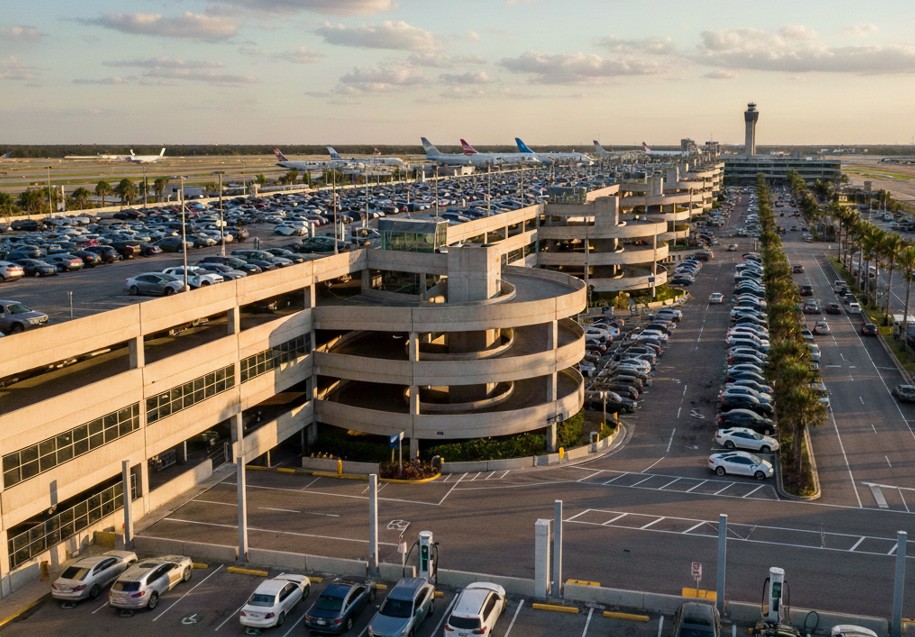
Airports face increasing pressure to manage parking congestion, curbside dwell times, rideshare activity, access control, and non-aeronautical revenue – all while maintaining smooth passenger flow. With the rapid growth of Uber, Lyft, and other transportation network companies (TNCs), airport parking and roadway operations have become significantly more complex. As a result, License Plate Recognition (LPR) has become essential infrastructure for modern airport parking and ground transportation programs. Leading airports now deploy both fixed and mobile LPR systems to automate parking operations, manage rideshare activity, enforce curbside rules, and protect revenue.
Fixed ALPR for Airport Parking and Rideshare Analytics
Fixed LPR systems use permanently installed cameras at high-volume, predictable locations across airport parking facilities and terminal roadways. These systems provide continuous vehicle identification and analytics.
Common Fixed LPR Applications at Airports
-
Parking garage entry and exit lanes
-
Terminal parking facilities and surface lots
-
Rideshare staging enforcement (Uber, Lyft, TNC staging)
-
Terminal curbsides with dwell-time limits
-
Airport access roads and toll points
-
Employee, permit, and restricted parking areas
Benefits of Fixed LPR for Airport Parking and Rideshare
Fixed LPR enables always-on automation and analytics critical to airport operations:
-
24/7 monitoring of parking and curbside activity
-
High read accuracy through optimized mounting and lighting
-
Integration with parking revenue systems, gates, permits, and enforcement platforms
-
Accurate tracking of dwell time, turnover, and peak congestion
-
Visibility into rideshare volume, frequency, and compliance
-
Reliable data for curbside planning, pricing, and policy decisions
Fixed LPR provides the data foundation for airport parking revenue management and rideshare curbside oversight.
Limitations of Fixed LPR
While fixed systems deliver continuous coverage, they are limited to installed locations and cannot easily adapt to temporary traffic shifts, seasonal surges, or special events without additional tools.
Mobile LPR for Rideshare, Curbside, and Parking Enforcement
Mobile LPR systems use cameras mounted on vehicles, trailers, or portable devices, allowing enforcement teams to move dynamically throughout airport property.
Common Mobile LPR Applications at Airports
-
License plate inventory and enforcement patrols
-
Dwell-time enforcement at pickup and drop-off zones
-
Overflow, economy, and remote parking areas
-
Commercial vehicle and TNC compliance monitoring
-
Construction zones, special events, and seasonal surges
Benefits of Mobile LPR for Airport Operations
Mobile LPR provides flexibility and real-time enforcement, particularly for rideshare-heavy environments:
-
Targeted enforcement of curbside violations as they occur
-
Rapid deployment without permanent infrastructure
-
Cost-effective coverage across large or changing areas
-
Increased enforcement visibility, improving compliance by rideshare drivers
-
Accurate counts of rideshare, commercial, and private vehicles
Limitations of Mobile LPR
Because mobile systems rely on patrols, coverage is not continuous and is best used alongside fixed LPR for complete operational visibility.
A Combined Fixed + Mobile LPR Strategy for Airports
Most airports achieve the strongest results by combining fixed and mobile LPR across parking, curbside, and rideshare programs.
-
Fixed LPR supports automated parking entry, curbside analytics, and continuous monitoring
-
Mobile LPR extends enforcement reach, addresses parking violations, and adapts to changing traffic patterns
Together, these systems give airports a complete picture of parking usage, curbside congestion, rideshare behavior, and compliance—improving revenue capture while reducing congestion and friction.
ROI Metrics Airports Track for Parking and Rideshare LPR
Airports measure ROI from airport LPR deployments using operational, financial, and customer experience metrics.
Revenue and Compliance Metrics
-
3–8% increase in parking revenue through improved plate-based fee capture
-
10–25% reduction in revenue leakage from unpaid exits, tailgating, and permit abuse
-
15–30% improvement in curbside and rideshare dwell-time compliance
-
Faster identification of unauthorized rideshare and commercial vehicles
Operational Efficiency Metrics
-
20–40% reduction in manual enforcement labor hours
-
25–50% faster vehicle throughput at parking entry and exit points
-
10–20% increase in curb turnover during peak travel periods
-
Reduced need for temporary enforcement staff during peak rideshare demand
Passenger Experience and Sustainability
-
Shorter waits at rideshare pickup zones and parking facilities
-
Fewer congestion-related complaints
-
Reduced vehicle idling supporting airport emissions goals
-
Improved passenger satisfaction tied to smoother curbside access
Payback Timeline
When fixed and mobile LPR are deployed together across airport parking, curbside, and rideshare enforcement, payback periods of 6–18 months are common.
Future-Ready Airport Parking and Rideshare Management
As airport ground transportation continues to evolve – with growing reliance on Uber, Lyft, and TNC services – LPR has become a critical tool for maintaining control without adding friction.
Fixed LPR delivers automation and analytics, while mobile LPR provides enforcement flexibility and rapid response. Together, they enable a future-ready approach to airport parking, curbside management, rideshare compliance, congestion reduction, and revenue protection.
References
The data used in this paper is based on the following reports:
- International Parking and Mobility Institute IPMI License Plate Recognition and Future of Parking Operations. Member registration required.
- National Academies of Sciences, Engineering, and Medicine 2016. Improving the Airport Customer Experience. Washington, DC: The National Academies Press.
- National Academies of Sciences, Engineering, and Medicine. 2024.Research Report 266. Airport Curbside and Terminal Area Roadway Operations: New Analysis and Strategies, Second Edition. Washington, DC.
- United States. Department of Transportation. Intelligent Transportation Systems Joint Program Office. Publication FHWA-JPO-18-6412018. Intelligent Transportation Systems Benefits, Costs, and Lessons Learned.