
Scaling Traffic Enforcement in the Era of High-Volume AI Processing
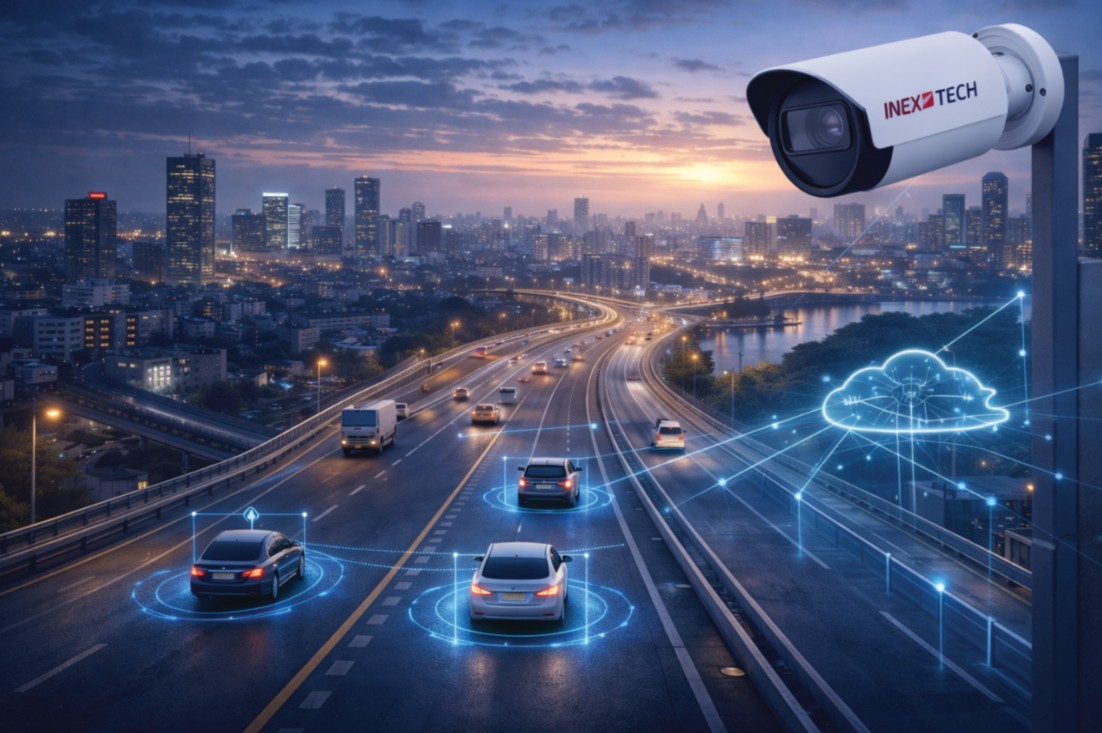
In this article, we share our experience deploying a nationwide AI-powered traffic enforcement automation system in Israel. Procured by the government, the solution was installed across multiple highways, with enforcement cameras mounted at regular intervals on existing roadside infrastructure.
The cameras automatically detect traffic violations, such as unauthorized use of bus lanes, and transmit enforcement records to a centralized enforcement management platform. Each record includes the license plate number, short video clips, and reference images to support adjudication.
With the system already processing more than 1.2 million vehicle events per month, the primary challenge is no longer image capture. Instead, it is efficiently managing the downstream data volume without a proportional increase in staffing or operational costs.
Several innovations underpin the system’s design, but the key breakthrough lies in end-to-end vehicle intelligence across the entire data lifecycle – from capture and classification to validation, prioritization, and enforcement.
High-Accuracy Vehicle Image Capture as the Basis for Reliable AI Traffic Enforcement
While the intelligence of the system lives in software, the hardware must deliver high-fidelity data, or the whole chain breaks down. Key hardware requirements include:
- Shutter Precision – Capturing clear plate data at highway speeds (up to 120 mph / 195 km/h).
- Optical Clarity – Overcoming ambient challenges like headlight glare, extreme weather, and low-light conditions.
- Multi-Sensor Fusion – Utilizing both IR and Color sensors to provide context and legal-grade evidence.
At Inex, hardware like the IZA800 series cameras is engineered for “Zero-Failure” initial capture. If the raw image is poor, the AI’s confidence drops — and manual review burden rises.

Reducing Manual Intervention Rate (MIR) in Traffic Enforcement at National Scale
The most critical—yet often overlooked—metric in national enforcement is the Manual Intervention Rate (MIR).
- The Problem: Even a highly accurate system with a 3% manual-intervention rate across 1.2 million vehicles generates 36,000 human validation actions per month.
- The Consequence: This creates backlogs, increases operational costs, and degrades the consistency required for legal defensibility.
To achieve true scale, the system must move from “detecting events” to “building automated case files.”
The Three Pillars of Scalable AI Traffic Enforcement Architecture
1. Intelligent Edge Filtering with On-Device AI
The modern ALPR camera is effectively a high-performance edge computer. By running AI algorithms (such as those powered by NVIDIA GPUs) directly on the device, the system performs “pre-cognition” before data ever reaches the cloud:
- Real-time Logic: Identifying specific violations (vehicle speed, bus lane occupancy, etc.) at the edge.
- Readability Filtering: Automatically discarding non-qualifying events or low-confidence captures.
- Privacy Masking: Digitally masking non-violating passengers to meet strict data privacy regulations.
The Goal: Only actionable, high-confidence evidence should leave the camera. This drastically reduces cloud processing costs and downstream noise.
2. Automated Violation Workflows and Metadata Integration
Legacy systems often send raw images that require human sorting. Modern systems, such as the Inex IZCloud platform, build structured violations automatically:
- Confidence Indexing: AI assigns a certainty score to every capture. High-confidence hits bypass tier-one review.
- Metadata Integration: Automatically syncing plate data with vehicle make, model, and jurisdictional rules.
- Cryptographic Auditing: Every step—from capture to citation—is digitally signed to ensure a bulletproof chain of custody in court.
3. Transparent Engineering for Trust and Auditability
Public trust is a functional requirement for any national program. Scalable systems build transparency into the workflow:
- Self-Service Portals: Enabling citizens to view their own violation evidence via QR codes.
- Digital Appeals: Reducing the administrative burden of manual dispute handling.
- Lifecycle Logs: Maintaining a transparent, auditable trail for every citation issued.
Complete Traffic Enforcement Lifecycle: From Detection to Decision
A mature AI enforcement workflow follows one disciplined, automated sequence:

When edge AI and cloud orchestration work in tandem, enforcement stops being reactive and becomes a predictable, sustainable infrastructure.
Comparing Legacy vs. AI-Automated Traffic Enforcement Systems
| Capability | Legacy Enforcement | AI-Automated (Inex) |
| Edge Capability | Raw image capture only | Full AI violation logic on-device |
| Manual Review | High — staff intensive | Ultra-low (<1%) |
| Data Output | Unstructured imagery | Metadata-rich case files |
| Growth Model | Linear — costly to scale | Exponential — lean at scale |

Conclusion — Transforming Traffic Enforcement with AI at Scale
The evolution of AI traffic enforcement isn’t just about better cameras. It’s about building a smarter system to manage the world they see — one that converts a high-volume stream of roadway events into reliable, legally defensible, automatically processed citations.
The programs that scale successfully share one thing: they treat the camera as the beginning of an automated pipeline, not the end of a manual process.