
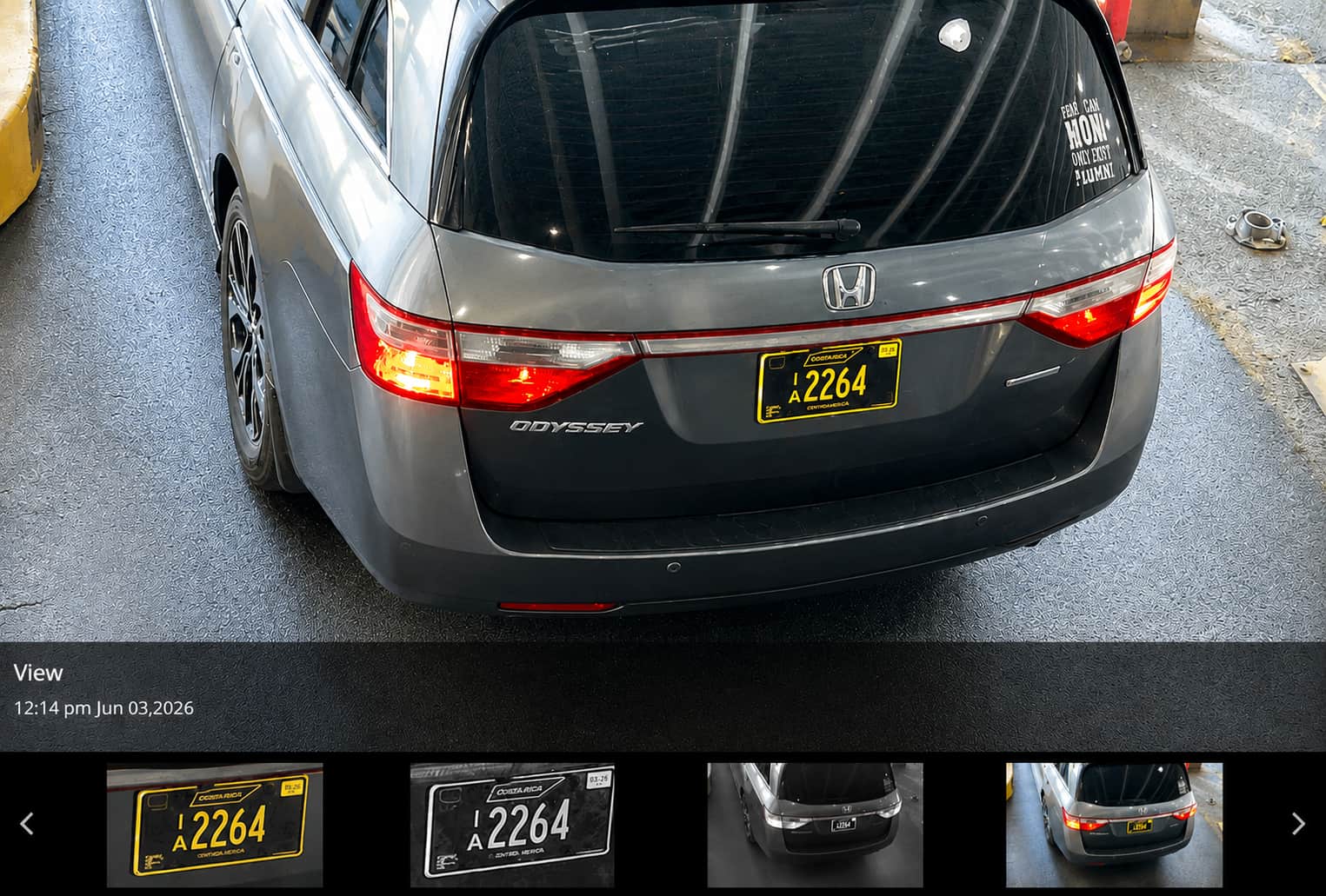
In the rapid tech race toward “AI-everything”, it’s easy to overlook a fundamental truth in traffic and parking technology: image quality drives performance. Maximizing license plate recognition accuracy still comes down to superior optical data. U.S. license plates are notoriously complex, varying by font, stacked characters, unique background imagery, and reflective characteristics. Specialized dual-sensor LPR cameras, such as Inex IZA500G and IZA500GR continue to deliver exceptionally high read rates – often exceeding 99% – without relying heavily on complex, resource-intensive AI OCR engines..
The Engineering Blueprint: How Dual-Sensor Technology Maximizes Plate Clarity for License Plate Recognition
Dual-sensor cameras achieve industry-leading precision by splitting the optical workload into two distinct, dedicated tasks. Instead of forcing a single lens to capture everything, the hardware separates the job between specialized sensors:
- Dedicated Infrared (IR) Sensor: One sensor is strictly optimized for IR plate capture. This ensures the license plate image is properly exposed, motion-frozen, and completely free from headlight glare or harsh environmental lighting noise.
- Contextual Color Sensor: The second sensor captures a full-color situational overview, providing essential visual context of the vehicle and its surroundings without compromising the plate-reading lens.
Deterministic OCR vs. Probabilistic AI for LPR and Vehicle Identification
While AI models guess based on probability, traditional OCR engines built into dual-sensor systems operate on deterministic rules. This offers several distinct advantages:
- Predictable and Consistent Performance: Traditional OCR engines are highly tuned specifically for U.S. plate fonts and structural layouts
- Elimination of “Creative Misreads” Probabilistic AI models sometimes generate creative misreads, unlike deterministic systems
- Reduced Processing Overhead: Operating without AI means lower computational requirements, faster processing times, and easier edge deployment – completely eliminating the need for expensive, heavy GPU dependency
Optimizing Commercial Parking Management and Smart City Infrastructure with Dual-Sensor LPI Cameras
Where do dual-sensor LPR cameras shine brightest? They deliver the most value in structured, controlled vehicle environments where consistency is key. Airports, parking facilities, and dedicated lanes benefit immensely from this hardware-first approach, because they feature known vehicle speeds, defined camera mounting angles, and consistent lighting conditions.
Commercial operators rely on this technology across a variety of important applications:
- Airport Parking Operations: Managing heavy, continuous traffic loops
- Parking Garages & Surface Lots: Automating revenue control and validation
- Curb Management & Enforcement: Keeping loading zones and city streets clear
- Ride-Share Queuing: Organizing on-demand transit flows
- Access Control & Credentialing: Allowing seamless entry using the plate-as-a-token
In these environments, the operational goal isn’t experimental accuracy – it is repeatable, auditable performance at scale.
When to Use AI vs. Dual-Sensor LPR Camera Systems
AI absolutely has a valuable place in modern surveillance and analytics, especially when you need data points that go far beyond a standard plate number. You should consider AI engines when your deployment requires tracking of:
- Vehicle Make, Model, Color, and Year.
- Advanced physical traits like accessories, wheels/axle count, or bumper stickers.
- Identification of emergency, delivery, or specialty vehicles.
However, for the vast majority of U.S.-based deployments, a well-engineered dual-sensor LPR system will deliver industry-leading read rates without the added cost and complexity of AI.
Sometimes, the best technology solution isn’t adding more intelligence – it’s capturing better data from
the very start.